The Weeknight Plate: A Simple Way to Build Dinner
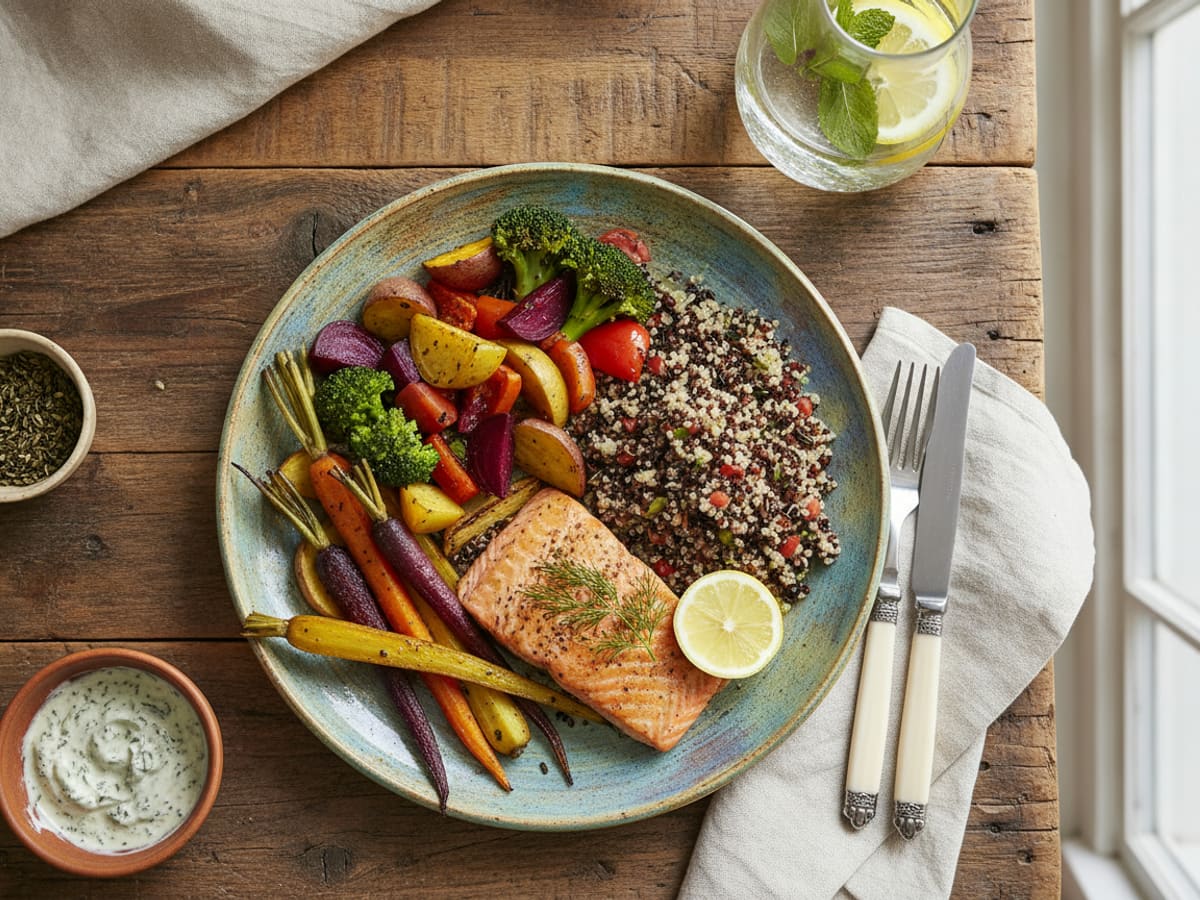
Skip the complicated meal plans. Here's an easy way to think about what goes on the plate when you're tired and hungry at the end of the day.
Why dinner feels harder than it should
By the end of the day, you've already made a lot of decisions. Dinner shows up as one more, and it comes with extra pressure: it should be healthy, tasty, quick, and something everyone will eat.
It helps to stop thinking of dinner as a recipe and start thinking of it as a pattern. When you know the basic shape of a balanced plate, you can build one from almost anything in your kitchen. You don't need a menu for the week or a cart full of special ingredients.
Here is the shape we like: some vegetables, some protein, something filling, and a little flavor on top. That's it. The rest of this article is about making each piece easier.
Start with the vegetable
Begin with the vegetable because it's the part that most often gets skipped when the evening gets busy. If you decide on it first, the rest of the plate tends to fall into place.
A good goal is to let vegetables take up about half of your plate. That's a rough guide, not a rule, and some nights will land closer than others.
You have more options than a fresh salad or a pan of steamed broccoli. Frozen vegetables are a perfectly good choice and are often ready in minutes. Canned vegetables can work too, especially if you rinse them. Pre-cut or bagged vegetables save chopping time on tired nights.
A few easy ways to cook them:
- Roast them on a sheet pan with a little oil and salt until the edges brown.
- Sauté them in a skillet with garlic or onion.
- Microwave them in a covered dish with a splash of water.
- Eat them raw with a simple dip or dressing, like sliced peppers, cucumbers, or carrots.
If you're not sure which vegetable to pick, choose whatever needs to be used up first. That alone cuts down on waste and on decision-making.
Add a protein and something filling
Once the vegetables are decided, add a protein. Protein helps a meal feel satisfying and keeps you from feeling hungry again an hour later.
Protein can come from many places. Think eggs, beans, lentils, tofu, fish, poultry, lean cuts of meat, yogurt, or cheese. Pick what you enjoy and what's already on hand. Canned beans and eggs are two of the fastest options, since neither needs much more than heating or a quick cook.
Next comes something filling, usually a starchy or whole-grain food. This is the part of the plate that brings comfort and energy. Some choices:
- Rice, quinoa, or barley
- Whole-grain pasta or noodles
- Potatoes or sweet potatoes
- Whole-grain bread or tortillas
- Corn, peas, or other starchy vegetables
You don't have to cook a fresh batch each night. Making extra rice or pasta once and keeping it in the refrigerator for a few days gives you a head start on later meals.
Here's how the pieces might look together, in a simple formula:
- Choose one or two vegetables.
- Choose one protein.
- Choose one filling food.
- Add a flavor boost (more on that below).
A bowl of rice with sautéed greens, a fried egg, and a spoonful of salsa fits. So does a baked potato topped with beans and steamed broccoli. Neither one required a recipe.
Flavor shortcuts that keep it interesting
A balanced plate that tastes bland won't stay in your routine for long. A few flavor helpers can make the same basic ingredients feel different from night to night.
Keep a handful of staples that do a lot of work with little effort:
- Lemon or lime, for brightness
- Garlic and onions, for a savory base
- Herbs, fresh or dried
- Spices and spice blends you already like
- Vinegar, mustard, or hot sauce
- A little cheese, nuts, or seeds for crunch and richness
Changing the flavor changes the meal. The same chicken, rice, and green beans can lean Mexican with cumin and lime one night, then turn toward a lemony, herby dinner the next.
Sauces and dressings are another shortcut. You can stir together olive oil, vinegar, and a pinch of salt in a minute. Yogurt mixed with herbs and lemon makes a quick sauce for almost anything.
Planning for the nights you have no energy
Some evenings, even a simple pattern feels like too much. That's normal, and it helps to have a fallback ready so those nights don't turn into a stressful scramble.
Think of a "bare minimum" version of the plate. It might be scrambled eggs, toast, and a bag of frozen vegetables. It might be canned beans warmed with a tortilla and some chopped tomato. It counts as dinner, and it's still balanced.
A few habits can make low-energy nights easier:
- Keep a small stash of pantry and freezer basics, like beans, frozen vegetables, eggs, and grains.
- Cook a little extra when you can, and use leftovers as the base of another meal.
- Wash and chop vegetables once, right after shopping, if that fits your routine.
- Let yourself repeat meals. Having the same few dinners in rotation takes the pressure off.
You don't need to get this right every night. A pattern you can follow most of the time does more for you than a perfect plan you can't keep up.